Design My Desk Setup · Free to try

Design the desk setup that feels like you

You know the feeling you want a space to have, even if you can't name the products. Tell us that feeling, and watch it become a finished, photoreal desk setup standing in your own room — designed around your taste, not a template.

Free to try · No card required · First render in ~30 seconds
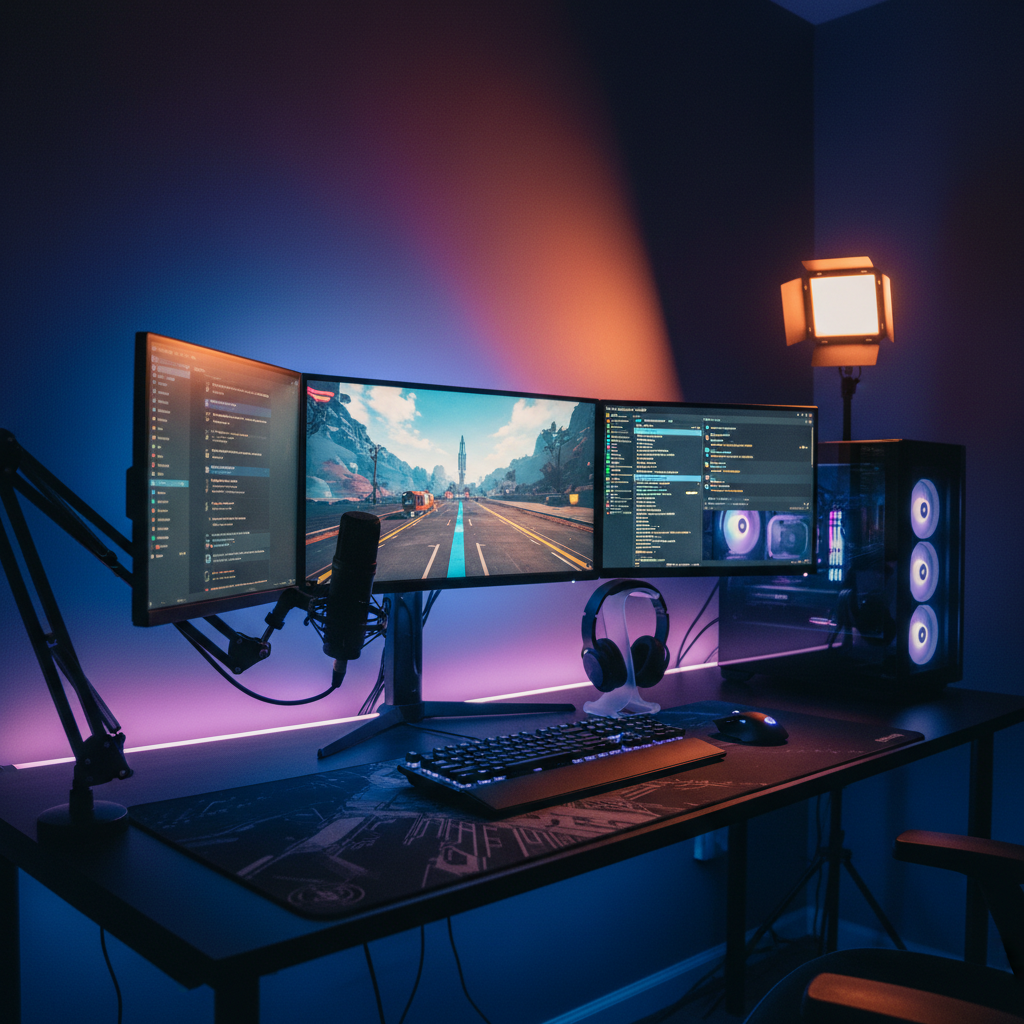
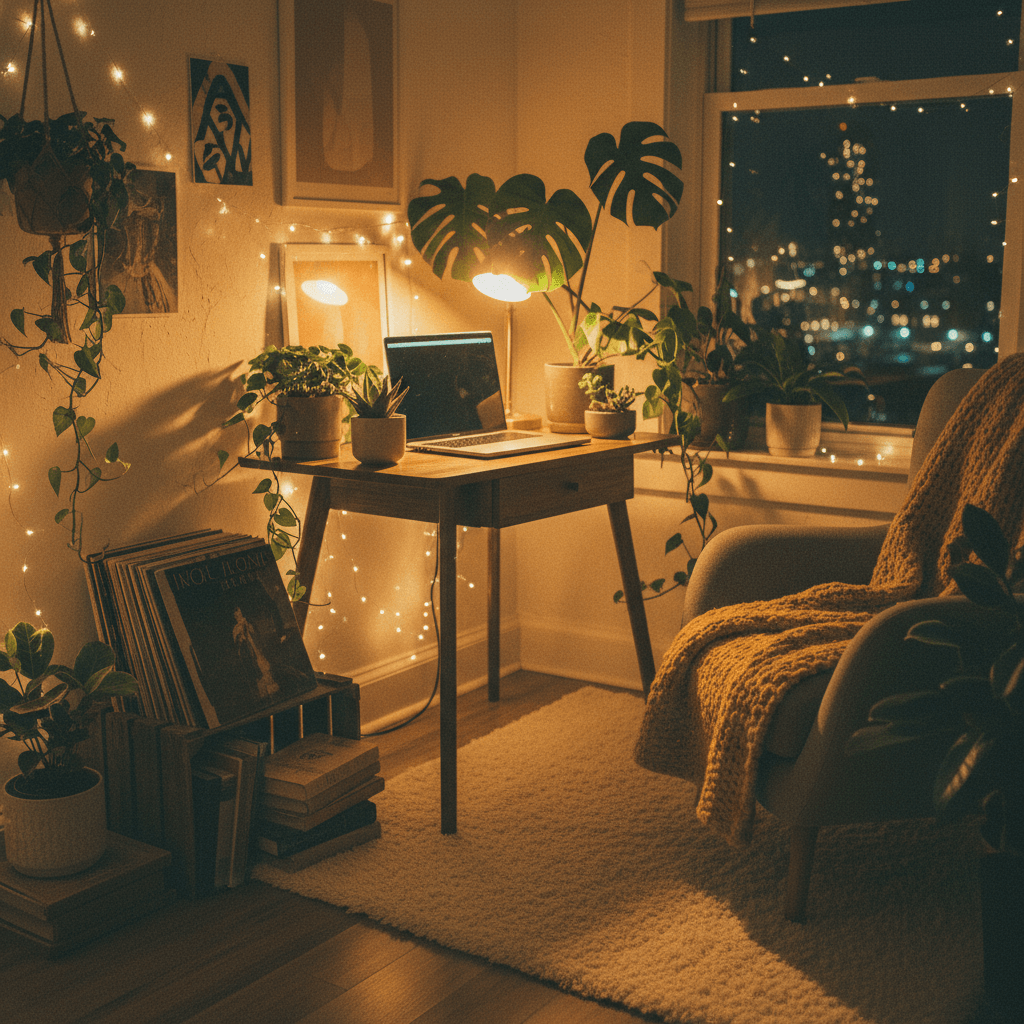
Design My Desk Setup — a desk setup rendered into a real room
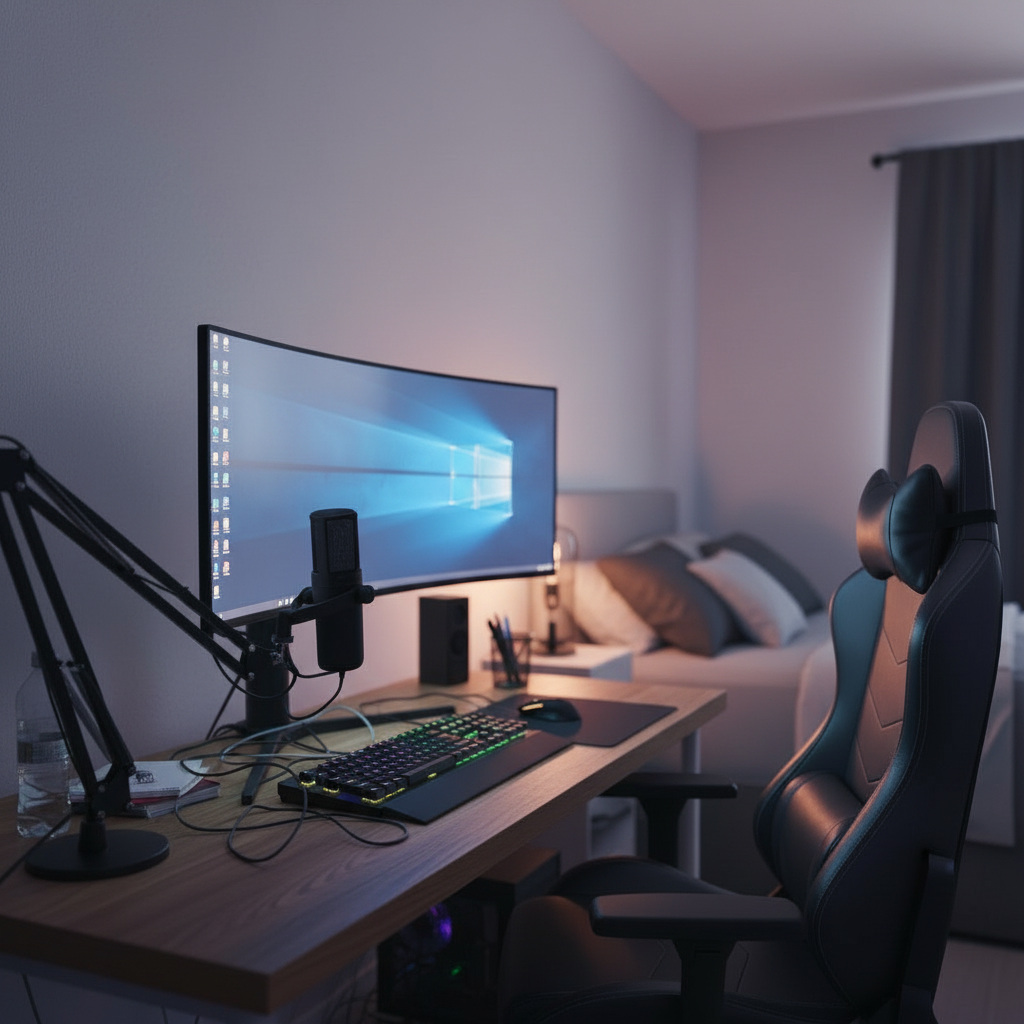
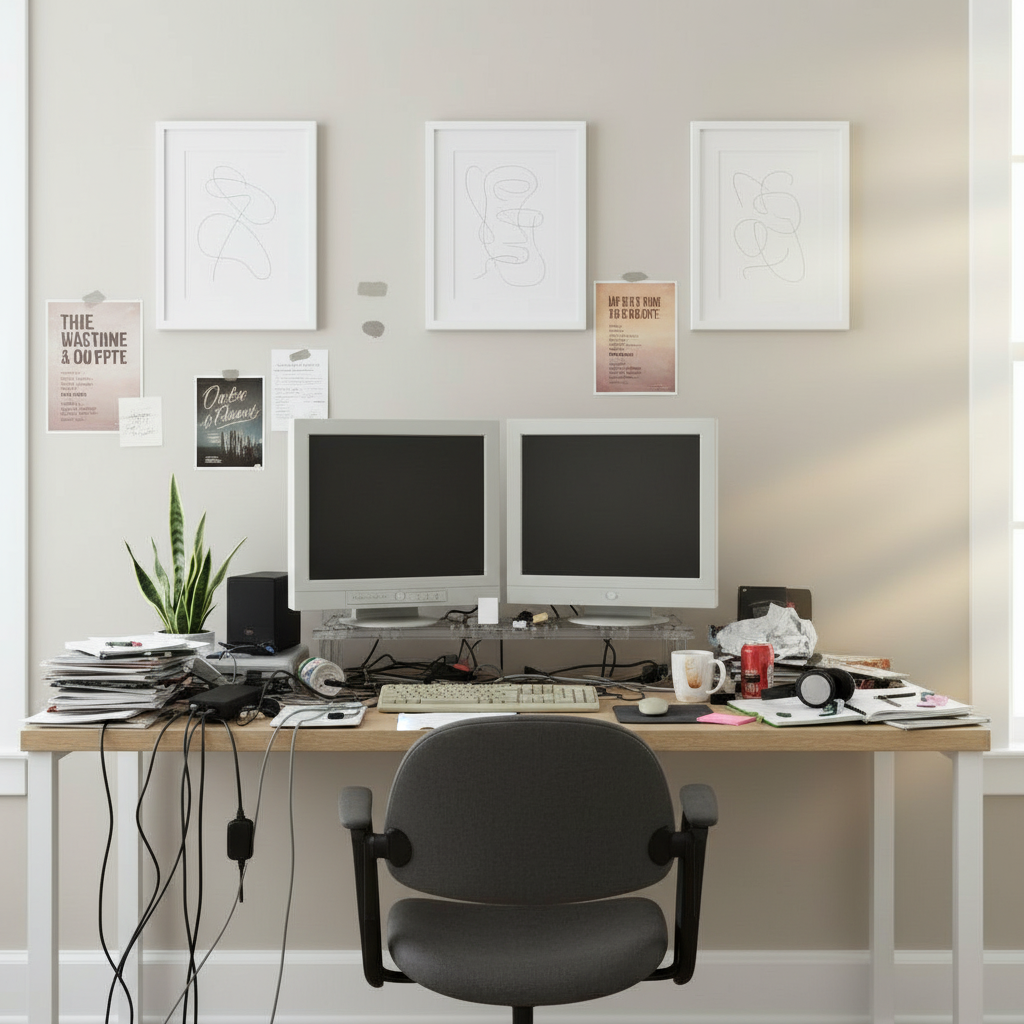
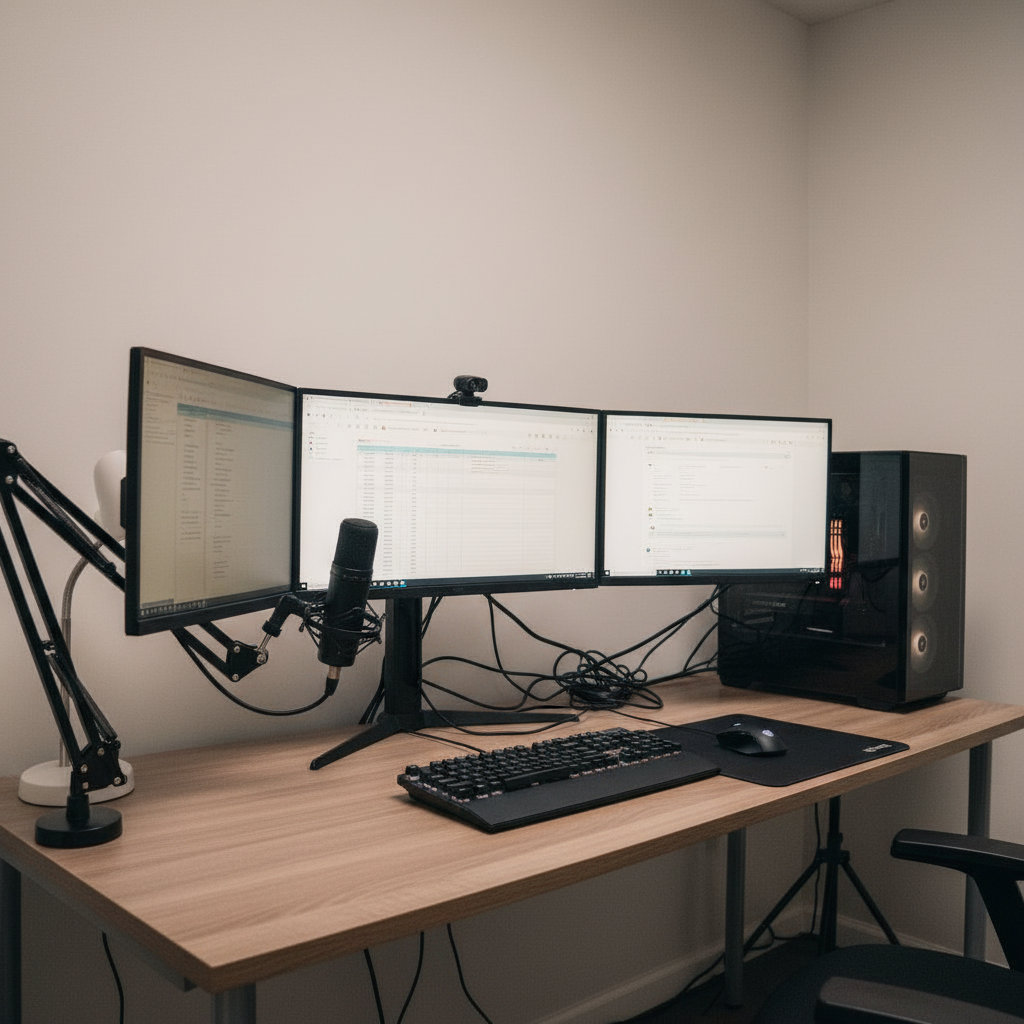
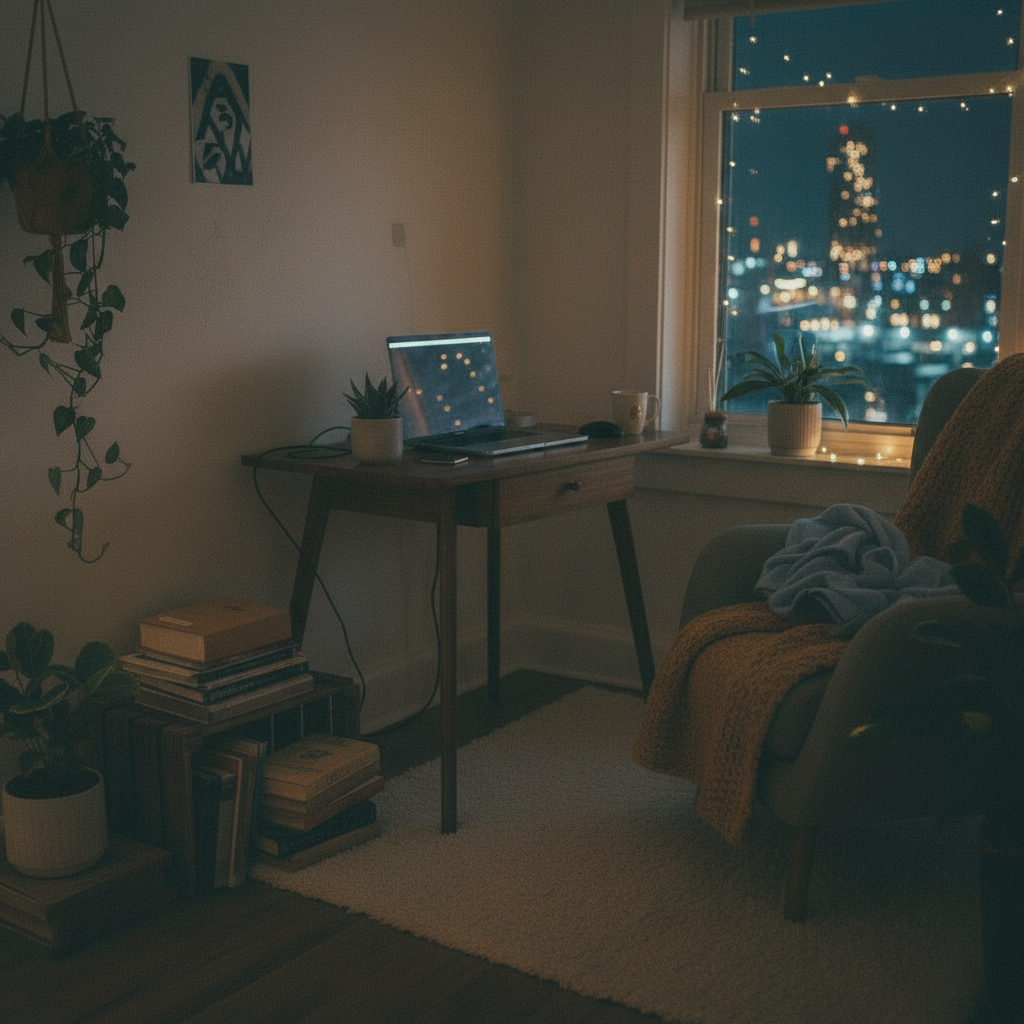
The same room before the setup was generated
Before
The idea

Design a desk that's
unmistakably yours

01
The feeling

Everyone has a sense of the room they wish they worked in. Maybe it's calm and pale and uncluttered, or moody and warm with a single lamp, or bold and a little loud. The hard part has never been wanting it — it's translating that gut feeling into a desk, a color, a light, a layout that holds together. That translation is exactly what this does, no design degree required.

02
The blank canvas

Designing your own space usually means staring at a blank canvas until the doubt creeps in. You pin a hundred photos of other people's desks and somehow feel further from your own. You second-guess a wood tone, abandon the cart, and settle for whatever ships fastest. The taste was always there. What was missing was a way to see your taste made real before you committed to it.

03
Describe the mood

So describe the mood instead of the model numbers. Say warm, or quiet, or playful, or expensive-feeling — and watch a complete setup take shape in your room in about thirty seconds. Nudge it warmer, swap the desk, lean it more minimal. You're not picking from a menu. You're discovering what your own version of a great workspace actually looks like.

What you get

A designer's eye,
pointed at your taste

No rules to memorize, no software to learn. You bring the taste; the design comes back finished.

Design by feeling, not specs

Describe the mood you're chasing in plain words — calm, warm, bold, expensive — and get back a coherent setup. You never have to know a single product name to design something you love.

01

Designer-grade taste, built in

Color harmony, proportion, the way a lamp warms a corner — the hard-won instincts a real designer charges for are baked in, so your first attempt already looks intentional, not improvised.

02

Designed into your actual room

This isn't a generic showroom. Your taste lands in your real walls, your real light, your real corner — so the design you fall for is one you can genuinely live with.

03

Steer every choice

Want a darker wood, a softer light, one less thing on the desk? Say so. The design bends to your preferences instead of forcing you to accept whatever a template decided.

04

Find your aesthetic

Not sure what you like yet? Try three directions side by side and your taste reveals itself. Most people only learn what they want by seeing what they don't.

05

A space that's truly yours

The goal isn't a trendy desk that looks like everyone else's. It's a room that feels like you walked into it — personal, considered, and impossible to copy off a feed.

06

Design yours
in four steps

No measuring, no mood boards, no design background needed.

01

Show us your room

Snap the corner you want to transform. Any photo works — bad light and odd angles are fine, the design adapts to your real space.

02

Describe the feeling

Say what you want in your own words. Calm and minimal, warm and cozy, bold and expressive — the vibe is enough to start.

03

See your taste rendered

A finished, photoreal setup appears in your room in about thirty seconds, designed around the mood you described.

04

Make it more you

Adjust the wood, the light, the layout, and regenerate. Keep refining until it feels unmistakably like yours.

Designing it yourself

How to design a desk setup
when you're not a designer

01 · Designing it yourself

Taste is the part you already have

Here's the reassuring truth: you have better taste than you give yourself credit for. You can walk into a cafe and instantly feel whether the room works. You know which photos make you linger and which you scroll past. That sensitivity is the entire creative engine of good design — it just rarely gets a chance to express itself, because between the feeling and the finished room sit a thousand intimidating decisions.

What stops most people isn't a lack of taste; it's a lack of fluency. They can't name the chair, don't know which lamp throws warm light, aren't sure if walnut fights with their wall. That gap is where good intentions die in an abandoned cart. Close the gap and your taste does the rest — which is the whole premise here. You point at a feeling, and the design vocabulary gets filled in for you.
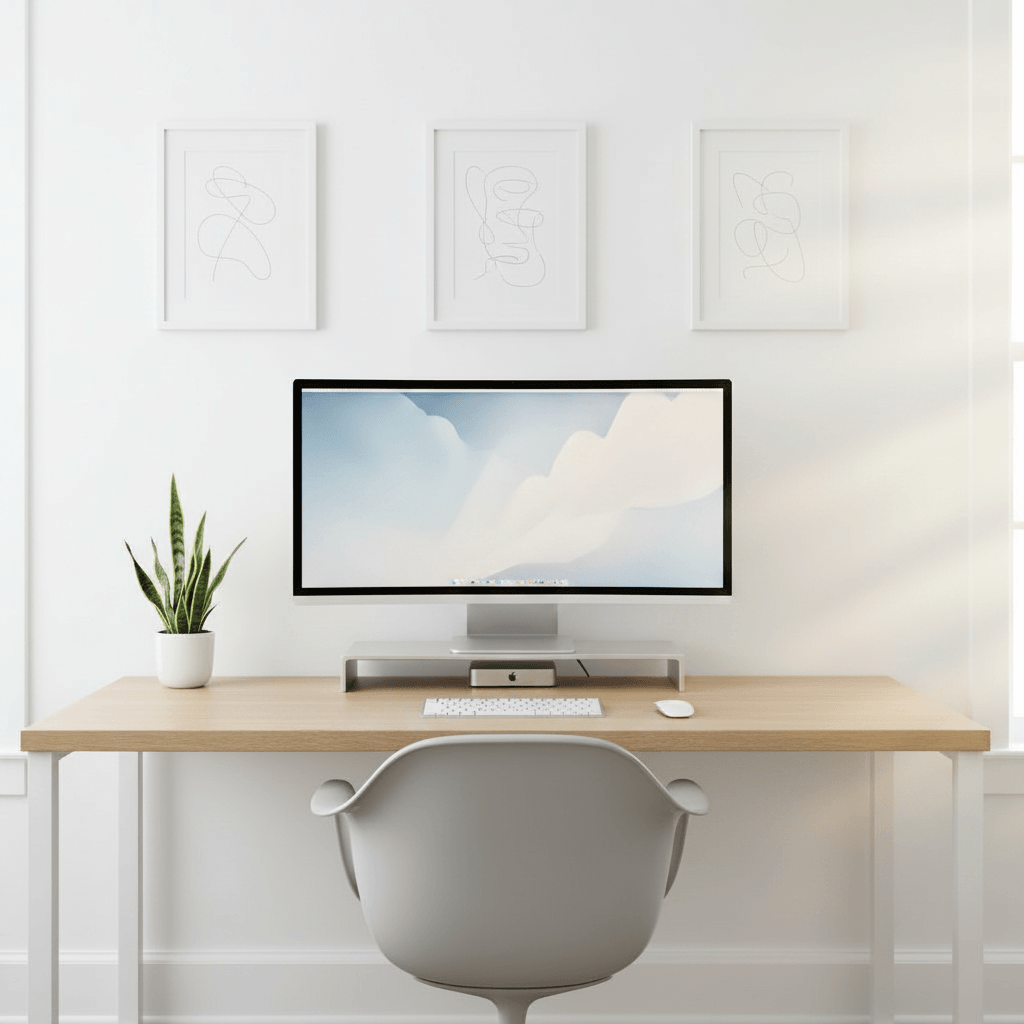
Style presetsPick a vibe
CalmWarmBoldCrispMoodyAiry
02 · Designing it yourself

Describe a mood, not a shopping list

The most freeing shift in designing your own space is to stop thinking in products and start thinking in feelings. Instead of agonizing over a specific monitor or a particular desk finish, you say what you want the room to feel like. Quiet. Energizing. Soft. A little luxurious. Those words carry an enormous amount of design information, and they're the language you already think in when you imagine your ideal space.

From a mood, a coherent set of choices follows naturally — a color story, a lighting temperature, the right amount of stuff on the surface, materials that belong together. The setup that comes back isn't a random assembly of trendy items; it's a considered interpretation of what you asked for. And because it arrives whole, you judge it the way you'd judge a real room: by whether it feels right, not whether each part is individually correct.

Lighting · Bias glowLive preview
Temperature4200K
Intensity72%
Accent
03 · Designing it yourself

Explore your aesthetic instead of guessing it

A lot of people freeze because they're not sure what their style even is. Minimal or warm? Bold or restrained? You can spend months unsure, because in the abstract every direction sounds appealing. The fastest way out of that paralysis is to stop deciding and start seeing — put a few interpretations of your room next to each other and let your reaction do the choosing.

Designing this way turns a daunting commitment into a low-stakes exploration. Try a pale, airy version and a moody, lamp-lit one. Notice which makes you want to sit down and work. Often the version you expected to love leaves you cold, and a direction you'd never have planned turns out to be exactly you. That discovery is the real payoff — you don't just get a design, you learn what you actually want.

Variations · 12Same room
01 / 12
02 / 12
03 / 12
Regenerate · ~30s Run
04 · Designing it yourself

Designer-quality results without the designer

A good designer earns their fee on the invisible decisions: keeping a palette from clashing, getting proportions to feel calm, placing light so a corner glows instead of glares. Those moves look effortless precisely because someone with trained instincts made them. They're also the exact things that trip up a first-timer trying to design alone, which is why a DIY attempt so often lands at almost-right.

Those instincts are built into the design here, so your output starts at a professional baseline instead of a beginner one. You're not handing over control — you still drive every meaningful choice. You're just doing it with a collaborator who quietly handles the craft, so the room you design looks like you hired someone, even though every decision about what it should feel like was yours.

Why this beats the restSide by side
Mood board
Pretty · not in your room
Realism30%
3D planner
Accurate · hours of work
Realism22%
This generator
Photoreal · in your room
Realism92%
PickedPhotoreal beat the rest
05 · Designing it yourself

From a feeling to a room you can actually build

Designing your dream desk is only satisfying if you can step into it. So the design you fall in love with isn't a fantasy render that evaporates when reality intrudes — it's sized to your room and lit like your room, and it comes with the real pieces behind it. When a version finally feels like home, you can see exactly what it's made of and bring it to life rather than chasing an impossible image.

And your taste keeps living somewhere. Every design you love saves to a gallery that follows you across web and mobile, so a late-night idea on your phone is waiting on your laptop tomorrow. Your aesthetic stops being a vague wish you keep meaning to act on and becomes a growing, visible body of work — your style, designed by you, ready whenever you're ready to make it real.

Parts list · 06From the render
Ultrawide 34"
LG · curved
$649
Standing desk
Walnut · 60in
$520
Ergonomic chair
Mesh · lumbar
$340
Bias light bar
RGB · USB-C
$59
Cable tray
Under-mount
$32
Total$1,847
Find your style

However you want
your space to feel

Point at a feeling and watch your room become a version of it you'd actually choose.

Calm and minimal

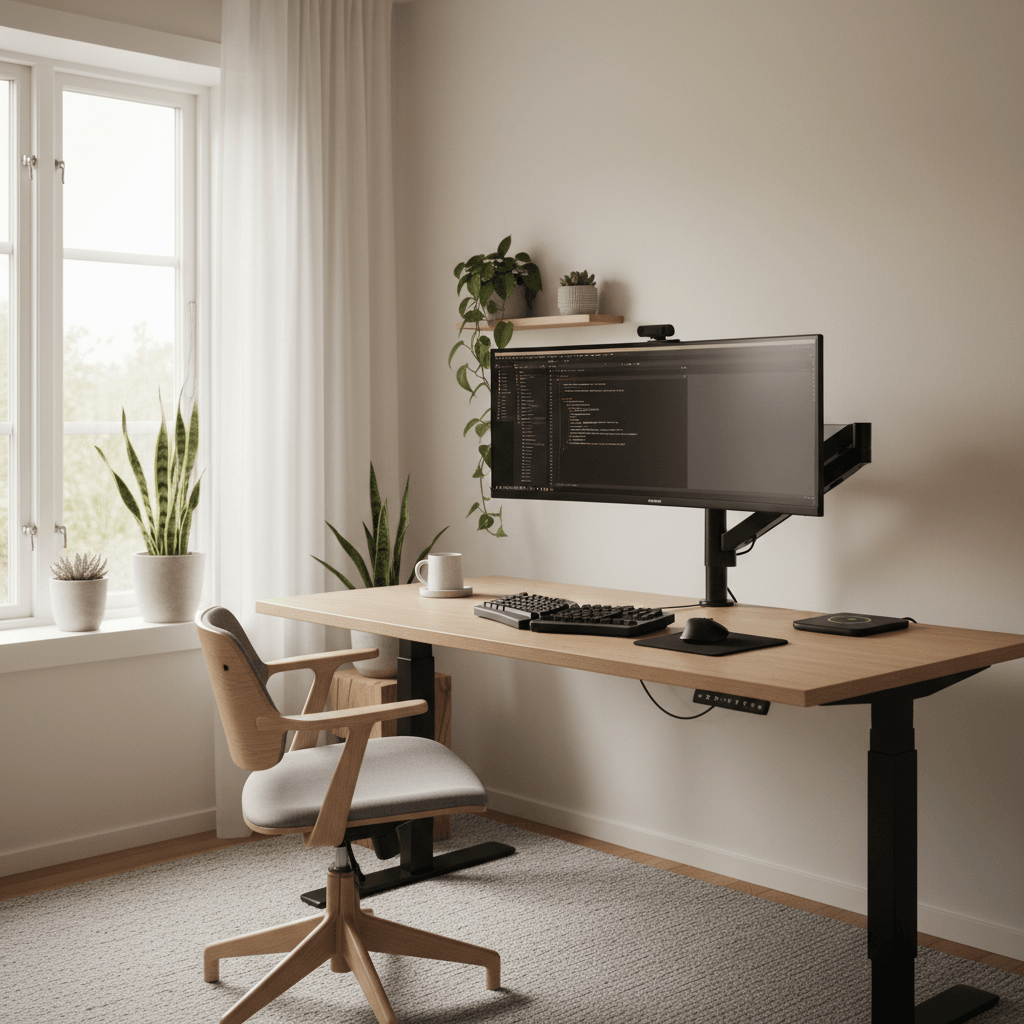
Pale surfaces, one device, nothing extra — a space that lets you think.

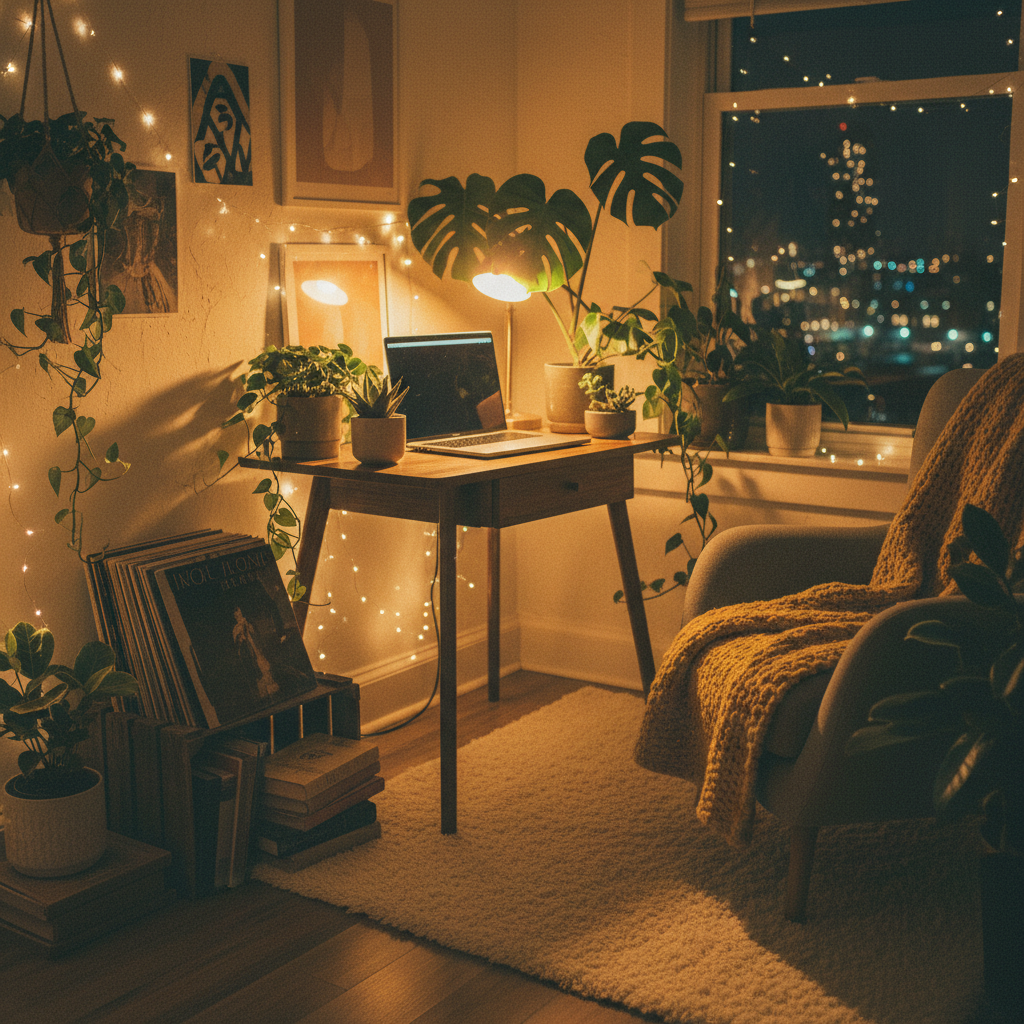
Warm and cozy

Soft lamp light, wood and texture for a room you don't want to leave.

Quietly luxurious

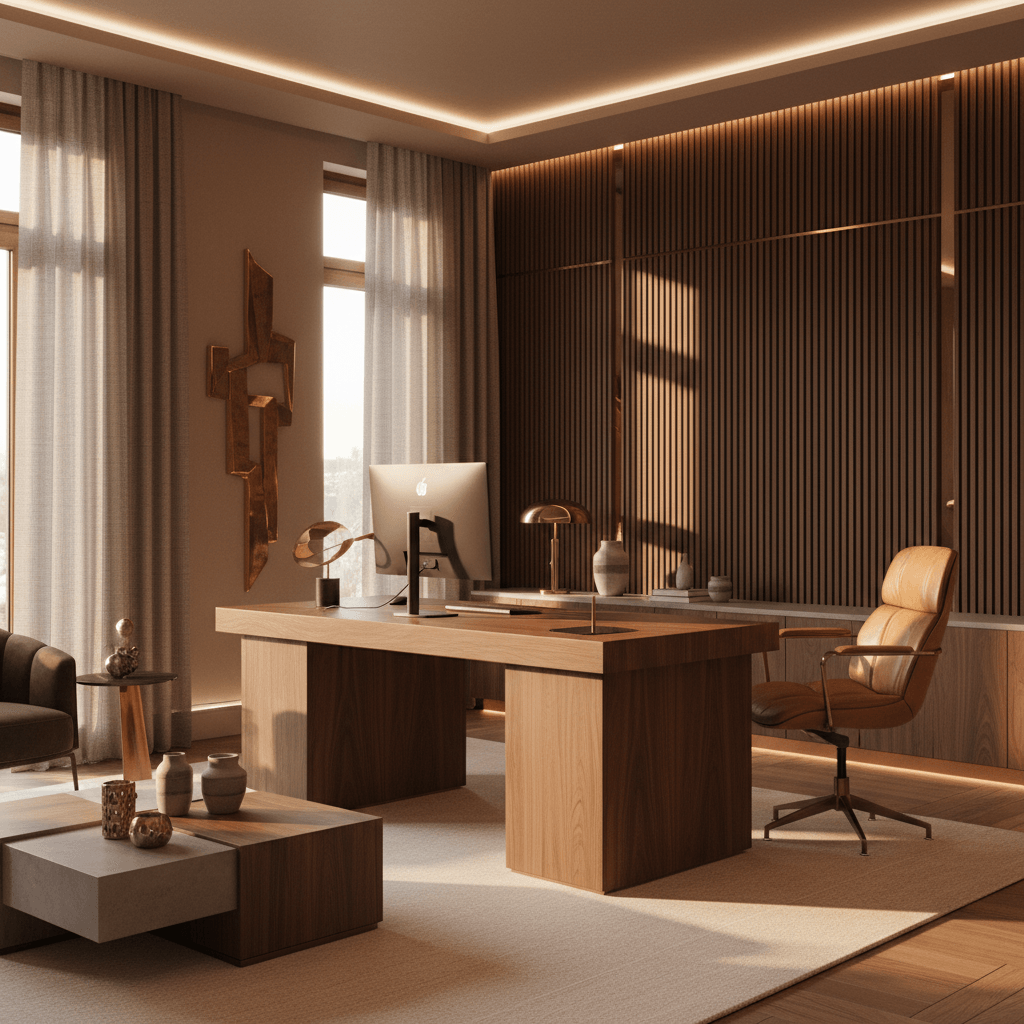
Walnut, brass and leather that feel considered and expensive.

Bold and expressive

Color, glow and personality for a desk that's loud on purpose.

Clean and modern

Crisp lines and tidy tech for a confident, contemporary feel.

Vivid and playful

Saturated light and energy for a space that wakes you up.

The transformation

Before and after, in your room

Drag any divider to reveal the original room under the generated setup.

After
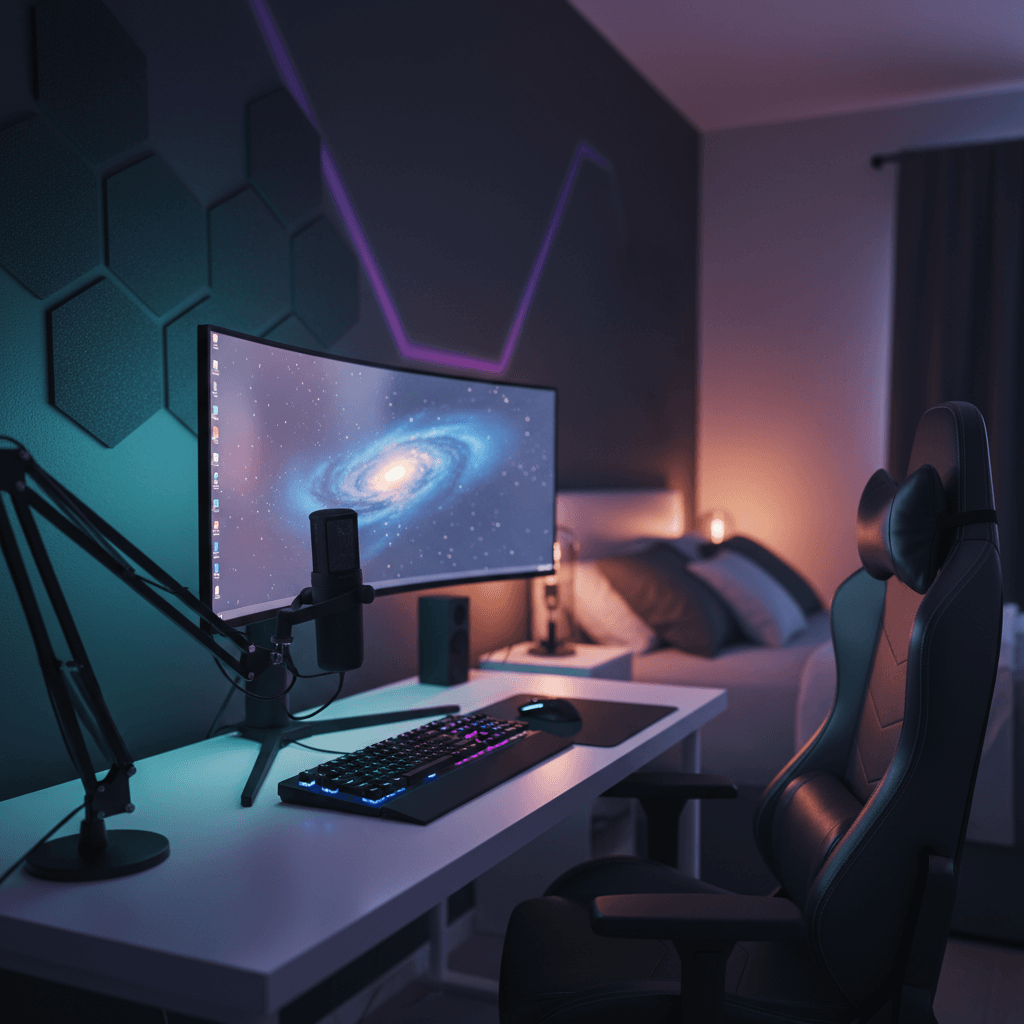
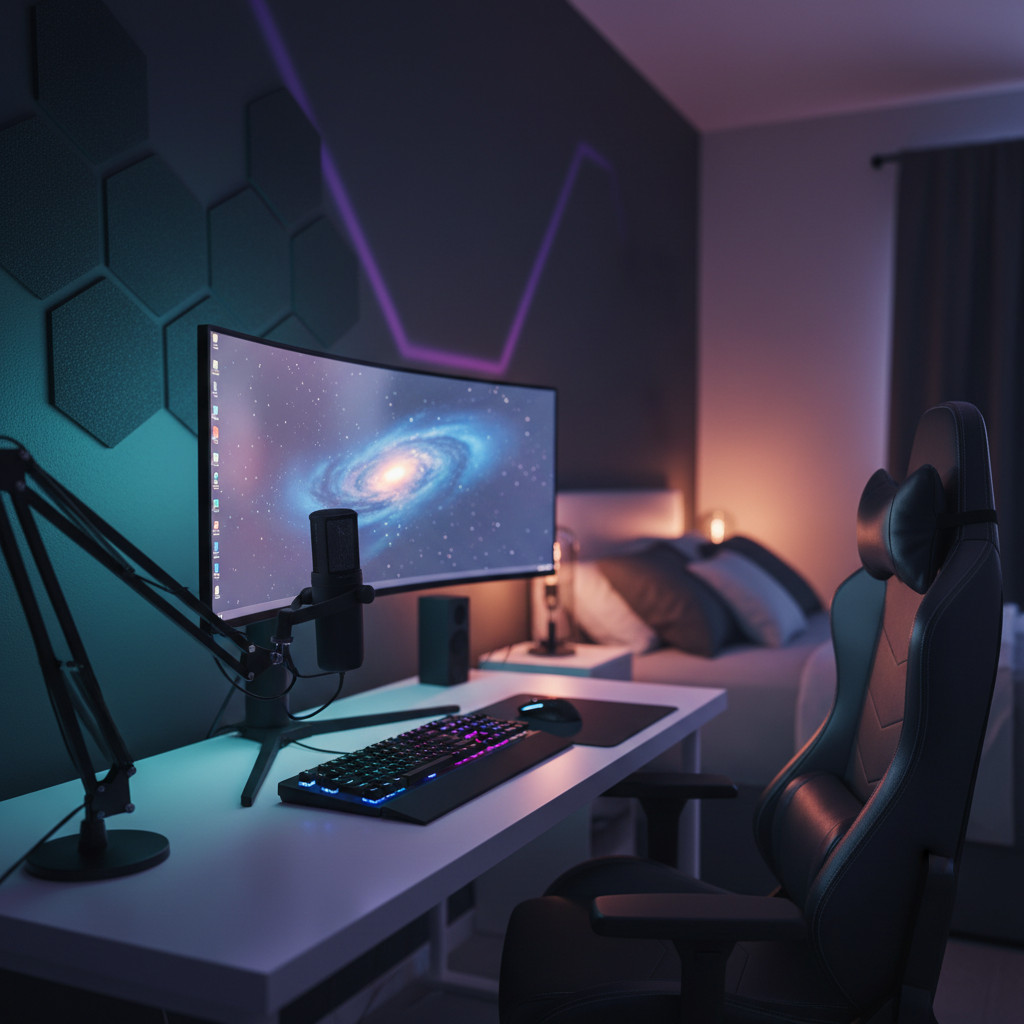
Curved · RGB · acoustic
After
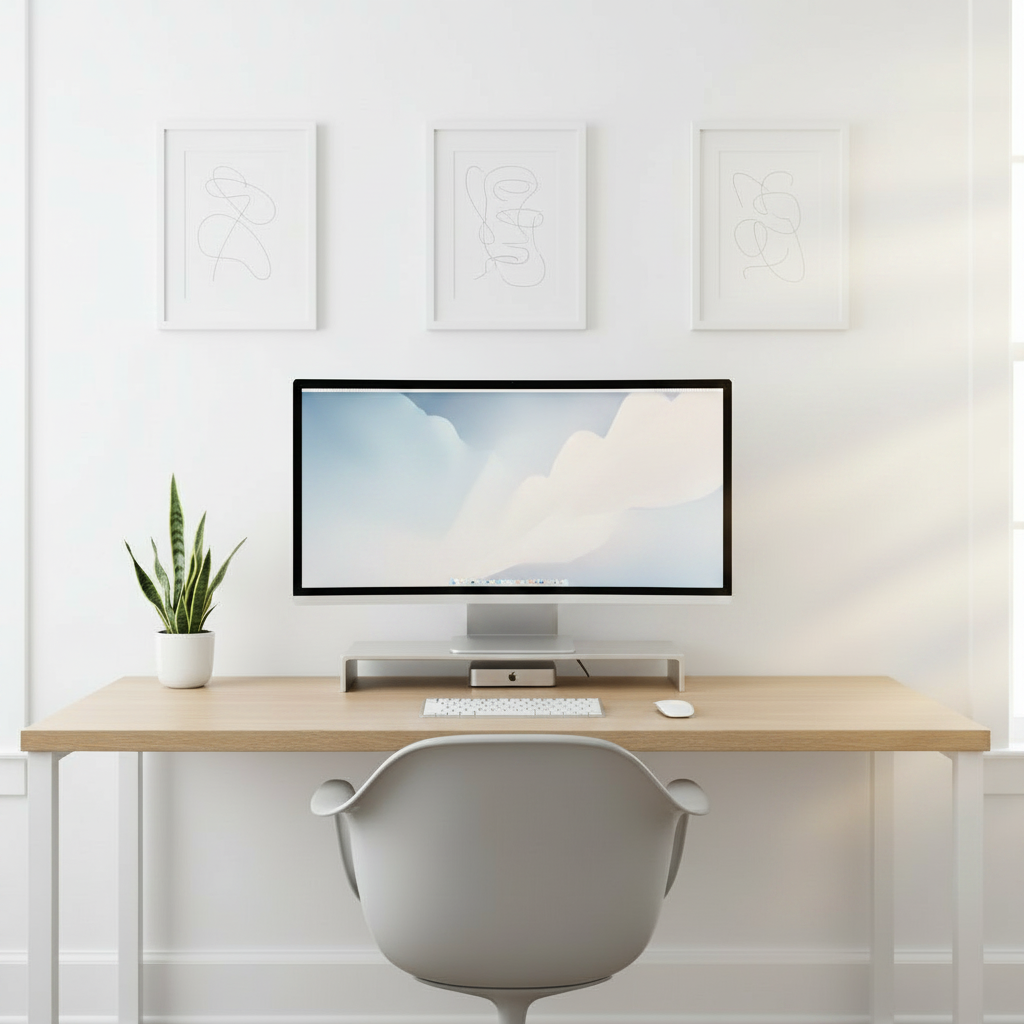
Same desk, decluttered
After
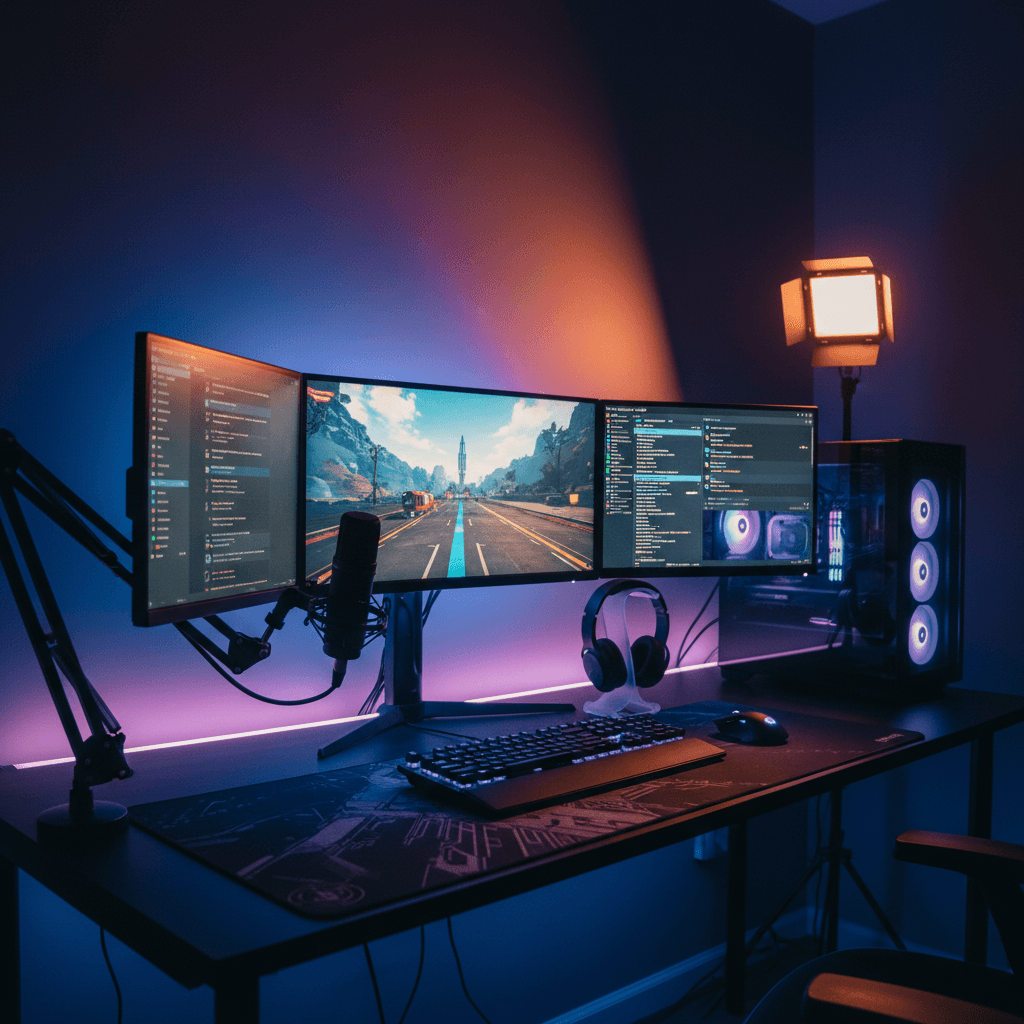
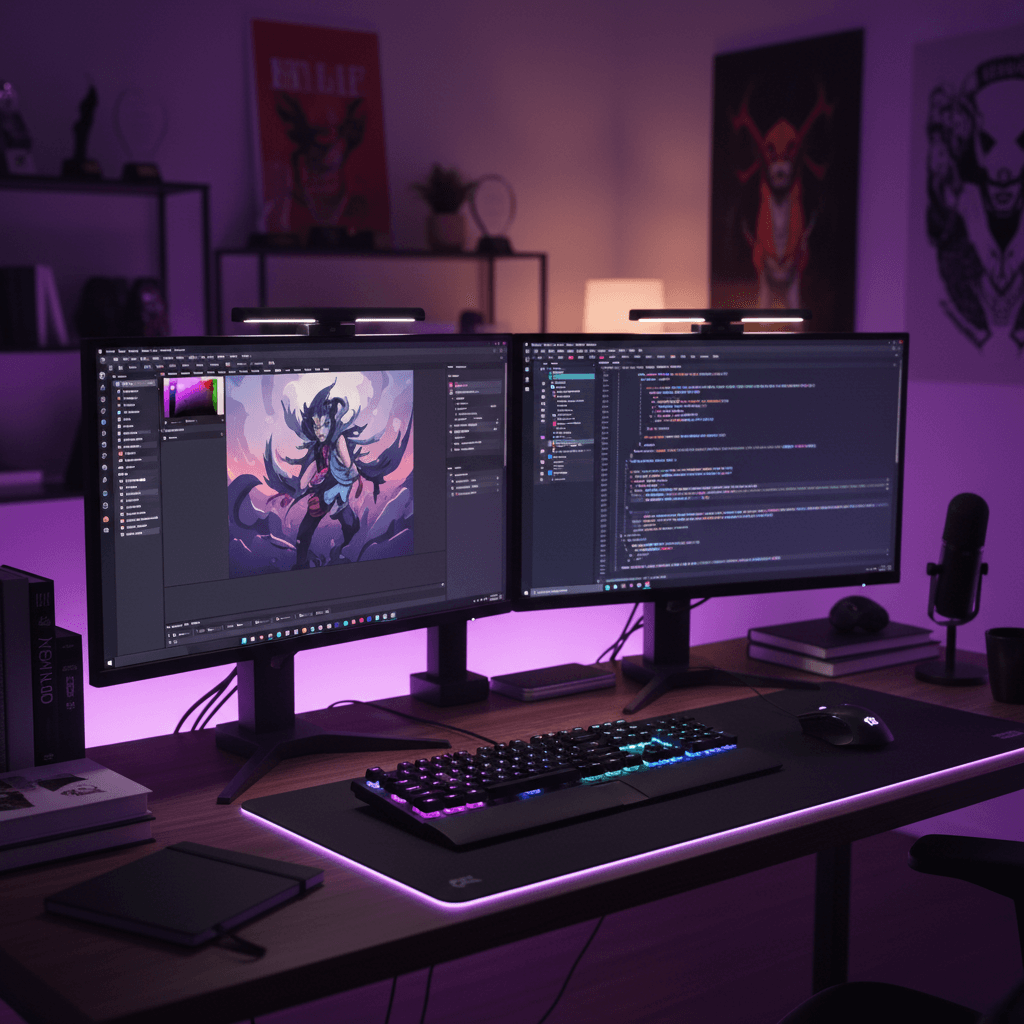
Dual 27" · mic · ambient

14,200+

Setups generated

6,300+

Active designers

4.9 / 5

Avg. rating

30 sec

To first render
FAQ

Design my desk setup
questions, answered

What does it mean to design my desk setup with this?

It means turning the feeling you want your space to have into a finished, photoreal design rendered in your own room. You describe a mood — calm, warm, bold — instead of picking exact products, and a complete, considered setup comes back in seconds. You stay the designer making the taste calls; the craft of pulling it together is handled for you.

Do I need any design experience to use it?

None at all. The whole point is that you don't need to know color theory, ergonomics rules or any product names. You bring your taste — the gut sense of what feels right — and describe it plainly. Designer-grade instincts like palette, proportion and lighting are built in, so a first attempt already looks intentional instead of improvised.

Is it free to design my own desk setup?

Yes. You can design setups, save your favorites and browse the gallery for free with no credit card required. The free plan includes a set number of generations per month and every style preset. Pro unlocks unlimited generations, 4K exports, the full real-product catalog, layered editing and a priority queue.

How do I describe a setup if I don't know what I like yet?

You don't have to know up front — that's normal. Start with rough words like quiet, warm or bold, and generate a few directions side by side. Seeing real versions of your room makes your taste obvious fast; you'll react to one and dismiss another, and that reaction is the design decision. Most people discover their style by seeing it, not by planning it.

Will the design actually fit my real room?

Yes. Your design lands in a photo of your actual space, sized to its real geometry and matched to the direction of your light. So the version you fall for isn't a showroom fantasy — it's a setup you could genuinely build in your own corner, with proportions and mood that hold up once it's real.

Can I change parts of the design I don't like?

Absolutely. You drive every choice. Ask for a darker wood, softer light, fewer things on the desk or a different layout, and regenerate to see it. You keep refining until the result feels unmistakably yours, rather than settling for whatever a fixed template happened to decide for you.

Will my design look like everyone else's setup?

No — that's the opposite of the goal. Because the design starts from your room and your described taste, the result is personal to you rather than a copy of a trending feed. Two people asking for cozy in different rooms get genuinely different spaces. The aim is a setup that feels like you walked into it, not one you scrolled past.

Last call

Design the setup
that feels like home

Describe the feeling, see it in your room, and make it yours in about thirty seconds. Free to try.

Free to try · No card required · 30 sec to first render